PANCE exam: format, cost, blueprint and practice questions
The PANCE exam is the Physician Assistant National Certifying Exam from NCCPA, the exam you pass to become a certified PA. It has 300 multiple-choice questions in five 60-minute blocks, costs $550, and requires a scaled score of 350 on a 200 to 800 scale. You must graduate from an ARC-PA accredited PA program to sit it.
- Exam
- Physician Assistant National Certifying Exam (PANCE), NCCPANCCPA Become Certified, checked 18 October 2026
- Questions
- 300 multiple-choice questions in five blocks of 60NCCPA Test Day, checked 18 October 2026
- Time
- Five hours of testing; six hours in total with 45 minutes of breaks and a 15-minute tutorialNCCPA Become Certified and Test Day, checked 18 October 2026
- Exam fee
- $550NCCPA Become Certified, checked 18 October 2026
- Passing score
- 350 on a scale of 200 to 800NCCPA PANCE Performance Guide, checked 18 October 2026
- Eligibility
- Graduation from an entry-level PA program accredited by ARC-PANCCPA Become Certified, checked 18 October 2026
- Attempts
- Six attempts within six years; once per 90 days, at most three times per calendar yearNCCPA Become Certified and PANCE Policies, checked 18 October 2026
- First-time pass rate 2025
- 91.5% (13,145 first-time takers)NCCPA Five Year Pass Rates, checked 18 October 2026
- Test centers
- Pearson VUENCCPA PANCE Policies, checked 18 October 2026
Know if you're ready for PANCE — before you book.
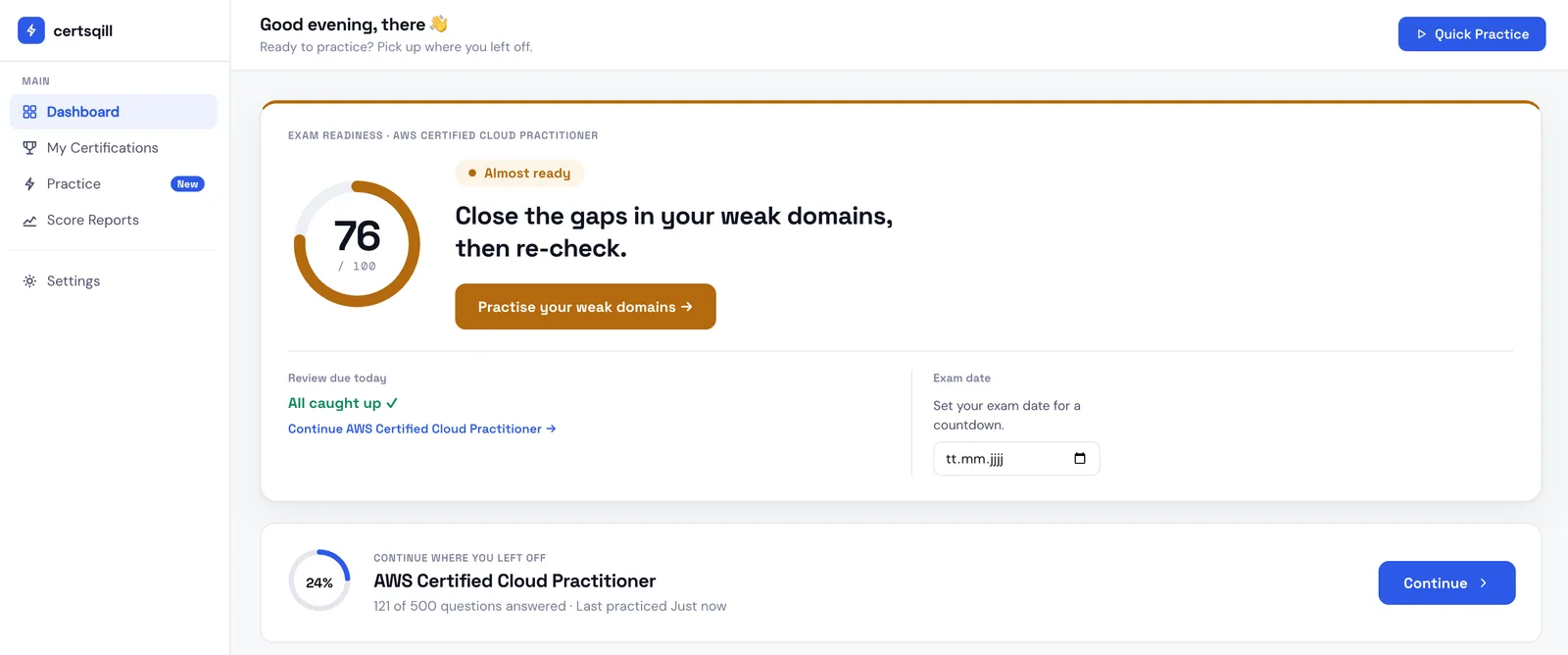
Certsqill measures your PANCE readiness across every official exam domain — one 0–100 score built only from first-try answers and kept deliberately conservative, so a high number has to be earned. It tells you whether to book, keep studying, or sit.
Why people switch to Certsqill
Everything you need to walk in ready
Know where you stand, understand every mistake, and study in your language — one payment, no subscription.
Your PANCE Readiness Score, not a guess
One conservative number from your first-try answers across every exam domain tells you whether to book the exam or keep studying.
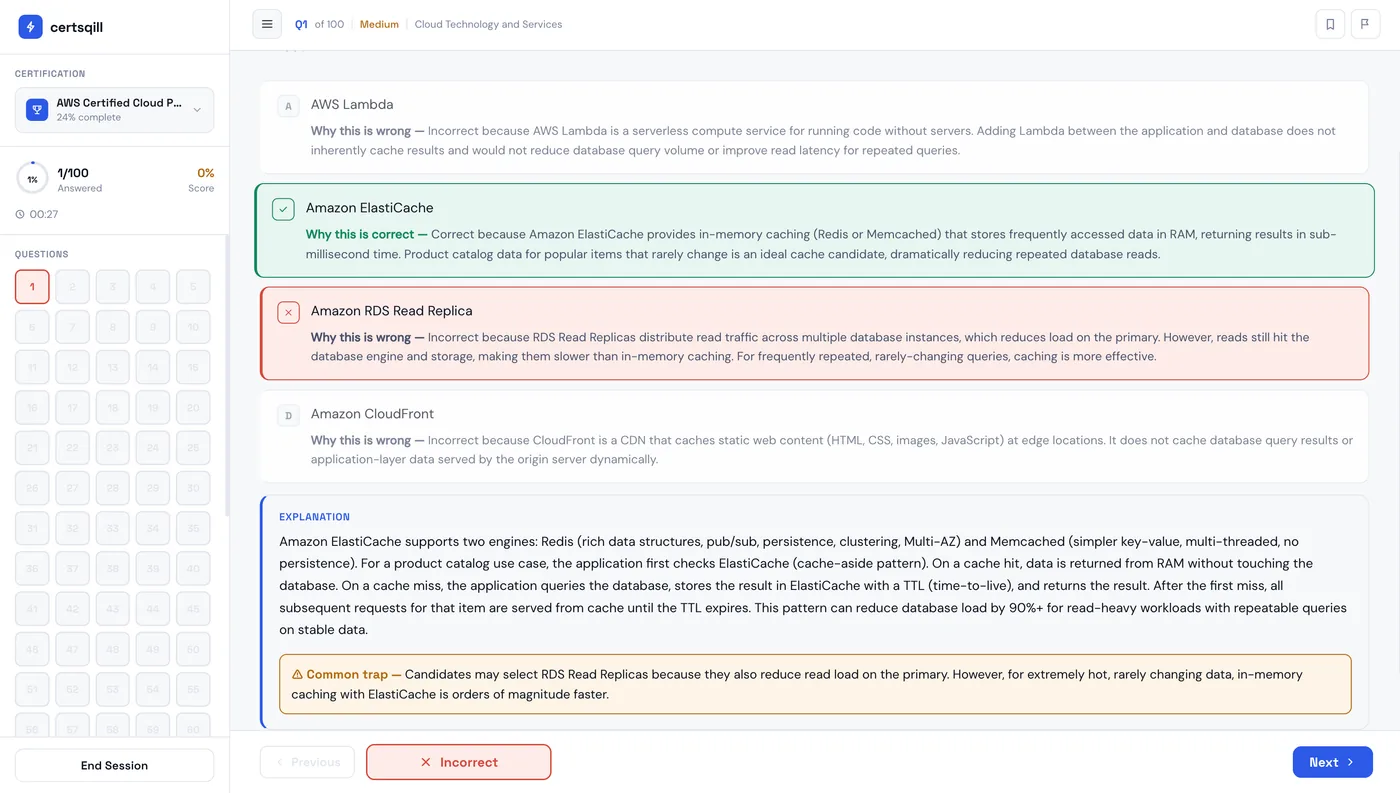
Understand every PANCE mistake
When you miss a question, it explains why — using your own answer history to catch the patterns you keep repeating. Included, no subscription.
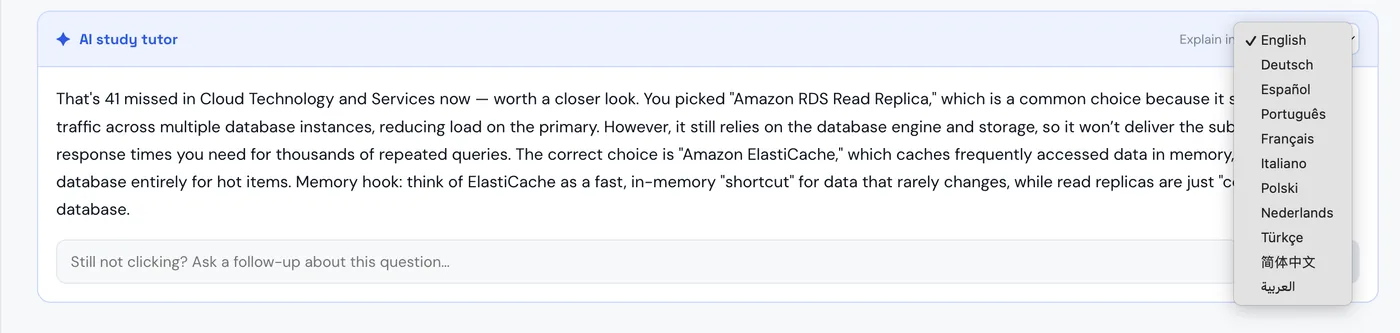
Explanations in your language, questions stay exam-accurate
Get every explanation in your language while the questions stay in exam-accurate English. Technical terms stay in English — the way the exam writes them.
Everything you need to pass
Why you can trust these PANCE questions
What is the PANCE exam?
The PANCE is the national certifying exam for physician assistants, administered by the National Commission on Certification of Physician Assistants (NCCPA). NCCPA describes it as an assessment of clinical knowledge, clinical reasoning and other medical skills. Passing it is the step to NCCPA certification as a PA.
To be eligible you must graduate from an entry-level PA program accredited by ARC-PA. NCCPA accepts applications from 180 days before your expected program completion date, and the earliest test date is seven days after completion.
Source: NCCPA — Become Certified. Checked 18 October 2026.
PANCE exam format
The PANCE test has 300 multiple-choice questions in five blocks of 60, with 60 minutes per block. Testing time is five hours; with 45 minutes of break time between blocks and a 15-minute tutorial, the appointment lasts six hours. The exam is taken at Pearson VUE test centers.
Once NCCPA opens your exam timeframe, you have 180 days to take the exam. Scores are reported on a scale from 200 to 800, and the passing score is 350.
Source: NCCPA — Test Day. Checked 18 October 2026.
PANCE exam breakdown: the NCCPA blueprint
NCCPA’s blueprint, effective January 2025, gives a two-way PANCE exam breakdown: medical content categories and task categories. Medical content makes up 94% of the exam; the other 6% is professional practice. Cardiovascular (11%) and pulmonary (9%) are the largest organ systems.
On the task side, formulating the most likely diagnosis (18%), history taking and physical examination (16%), clinical intervention (16%) and pharmaceutical therapeutics (15%) carry the most weight.
- Cardiovascular 11%, Pulmonary 9%
- Gastrointestinal/Nutrition 8%, Musculoskeletal 8%
- Infectious Diseases 7%, Neurologic 7%, Psychiatry/Behavioral Science 7%, Reproductive 7%
- Endocrine 6%, Eyes, Ears, Nose and Throat 6%, Professional Practice 6%
- Hematologic 5%, Renal 5%
- Dermatologic 4%, Genitourinary 4%
Source: NCCPA — PANCE Blueprint (effective January 2025). Checked 18 October 2026.
PANCE exam cost
The PANCE exam cost is $550, paid with your application to NCCPA. Official practice is optional and extra: each NCCPA practice exam costs $50.
After certification, the costs continue: to keep the credential, PAs log 100 CME credits in each two-year cycle and pass a recertification exam by the end of the tenth year, for a $350 exam fee.
Source: NCCPA — Become Certified. Checked 18 October 2026.
How hard is the PANCE exam?
NCCPA publishes pass rates, which is the best evidence for how hard the PANCE exam is. In 2025, 91.5% of 13,145 first-time takers passed; across all takers the rate was 88.4%. In the four years before, the first-time pass rate stayed between 91.9% and 93.2%.
So most first-time candidates pass, but 8.5% of first-time takers did not in 2025. The challenge is breadth and pace: 300 questions across 15 content categories, one minute per question, with diagnosis and management tasks making up most of the exam. If you fail, you can retake once in any 90-day period and no more than three times per calendar year, within six attempts in six years.
Source: NCCPA — Five Year Pass Rates for PANCE. Checked 18 October 2026.
The NCCPA PANCE practice exam
NCCPA sells its own NCCPA PANCE practice exam: 120 questions in blocks of 60, with 60 minutes per block, for $50 per exam. Three PANCE practice exams are available, each must be completed within 180 days, and you get a performance profile afterward.
Is the NCCPA PANCE practice test required? No. NCCPA says taking any of its practice exams is completely voluntary. Its value is that the questions and timing come from the organization that writes the PANCE, which makes it a good checkpoint near the end of your PANCE exam prep.
Source: NCCPA — Practice Exams. Checked 18 October 2026.
Free PANCE practice questions and example questions
NCCPA posts PANCE sample questions on its website as a downloadable PDF, with one example shown on the page itself. These PANCE example questions show the official question style. If you are looking for free PANCE practice questions, this publicly posted PDF is the official source to start with; NCCPA’s full practice exams are paid.
A PANCE question of the day habit works well alongside a full practice test: a few PANCE questions every day keep all organ systems active between longer study blocks. NCCPA does not publish its own daily question on the pages checked.
Source: NCCPA — PANCE Sample Questions. Checked 18 October 2026.
How to study for the PANCE
Build your PANCE study plan from the blueprint percentages. Give the largest categories, such as cardiovascular, pulmonary, gastrointestinal and musculoskeletal, the most time, but do not skip the 4% and 5% systems: together, dermatologic, genitourinary, hematologic and renal still make up 18% of the exam.
A practical PANCE study schedule has three phases: content review by organ system, mixed PANCE exam practice questions across all systems, and full-length timed blocks of 60 questions in 60 minutes. Place the NCCPA practice exams at the start, to find gaps, and near the end, to confirm readiness. That structure is our recommendation, not an NCCPA requirement.
If you are working out how to study for PANCE task areas, remember that diagnosis, history and physical, clinical intervention and pharmacology make up 65% of the exam. Practice questions that ask what to do next train exactly that.
Source: NCCPA — PANCE Blueprint (effective January 2025). Checked 18 October 2026.
PANCE review course, books and study resources
NCCPA does not run a PANCE review course or publish a PANCE study guide; its official PANCE study resources are the blueprint, the sample questions and the paid practice exams. Everything else, from PANCE prep courses to review books, comes from other providers or from your PA program.
Before you pay for a PANCE exam review course, ask what it adds to NCCPA’s own blueprint, sample questions and practice exams. Look for structured review against the blueprint and plenty of practice in the style of PANCE exam questions, with explanations.
When you compare a PANCE review book, a PANCE/PANRE review book or a PANCE review class, check two things: that it follows the January 2025 blueprint, and that it includes enough PANCE prep questions with explanations. A good PANCE review is less about reading more pages and more about testing yourself under exam conditions.
Source: NCCPA — Practice Exams. Checked 18 October 2026.
After you pass: keeping certification
NCCPA certification runs on a ten-year maintenance process made up of five two-year cycles. In each cycle you log 100 CME credits online, and by the end of the tenth year you must pass a recertification exam. The recertification fee is $350 regardless of the option you choose.
Source: NCCPA — Maintain Certification. Checked 18 October 2026.
PANCE practice questions on Certsqill
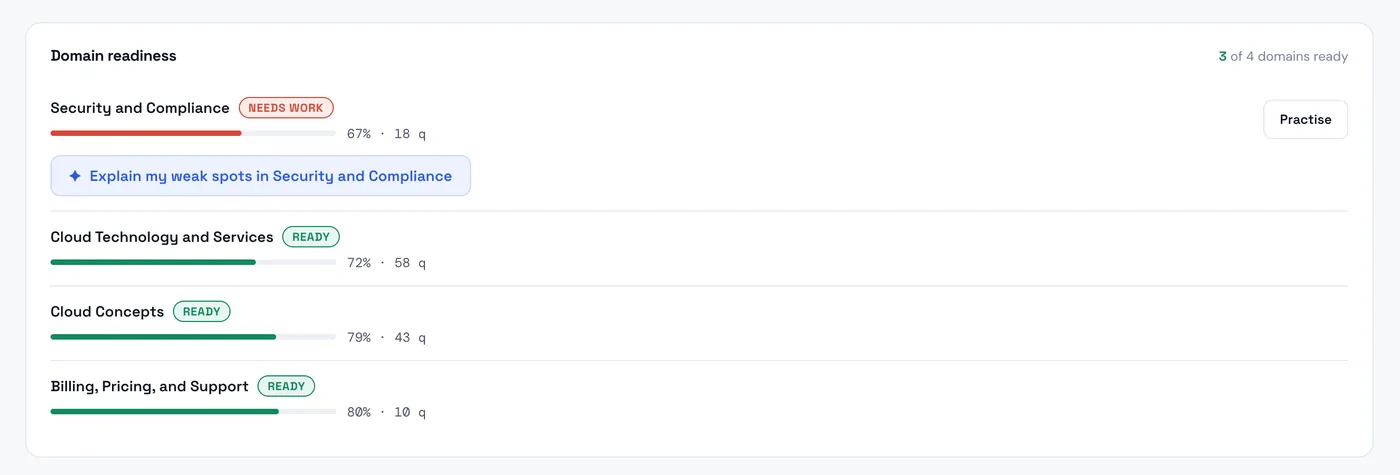
Certsqill’s PANCE practice questions are expert-developed and mapped to NCCPA’s blueprint, from cardiovascular and pulmonary medicine to professional practice.
Every question has an explanation for each answer option, and your results build a readiness score per content category, so your PANCE prep shows where you stand before test day. A 7-day money-back guarantee applies.
PANCE questions people ask
What is the PANCE exam?
The Physician Assistant National Certifying Exam from NCCPA. It assesses clinical knowledge and reasoning and is required for PA certification. Source: NCCPA, checked 18 October 2026.
How much does the PANCE exam cost?
$550, paid with your application. NCCPA practice exams cost $50 each. Source: NCCPA, checked 18 October 2026.
How many questions are on the PANCE?
300 multiple-choice questions in five blocks of 60, with 60 minutes per block. Source: NCCPA, checked 18 October 2026.
What score do you need to pass the PANCE?
350 on a scale of 200 to 800. Source: NCCPA PANCE Performance Guide, checked 18 October 2026.
What is the PANCE pass rate?
In 2025, 91.5% of first-time takers passed and 88.4% of all takers. Source: NCCPA Five Year Pass Rates, checked 18 October 2026.
Is there an official NCCPA PANCE practice exam?
Yes. NCCPA sells three 120-question PANCE practice exams for $50 each, with a performance profile. Source: NCCPA, checked 18 October 2026.
Are there free PANCE practice questions from NCCPA?
NCCPA posts PANCE sample questions as a downloadable PDF on its website; its full practice exams are paid. Checked 18 October 2026.
How many times can you take the PANCE?
Six times within six years, no more than once in any 90-day period and three times per calendar year. Source: NCCPA, checked 18 October 2026.