Scaled Professional Scrum (SPS) certification: exam, cost and training
Scaled Professional Scrum (SPS) is Scrum.org’s certification for scaling Scrum with the Nexus framework. The exam costs US$250 per attempt and has 40 questions in 60 minutes with an 85% passing score, in English. No course is required, though Scrum.org highly recommends its two-day Scaled Professional Scrum class, which includes an attempt. The certification is for life with no renewal fee.
- Certification
- Scaled Professional Scrum (SPS), issued by Scrum.orgScrum.org SPS page, checked 14 October 2026
- Exam cost
- US$250 per attemptScrum.org SPS page, checked 14 October 2026
- Questions
- 40Scrum.org SPS page, checked 14 October 2026
- Time limit
- 60 minutesScrum.org SPS page, checked 14 October 2026
- Passing score
- 85%Scrum.org SPS page, checked 14 October 2026
- Format and language
- Multiple choice, multiple answer, true/false; EnglishScrum.org SPS page, checked 14 October 2026
- Basis
- The Nexus Framework, as described in the Nexus GuideScrum.org SPS page, checked 14 October 2026
- Course requirement
- None — the Scaled Professional Scrum class is highly recommendedScrum.org SPS page, checked 14 October 2026
- Validity
- Lifetime, no annual renewal feeScrum.org SPS page, checked 14 October 2026
Know if you're ready for SPS — before you book.
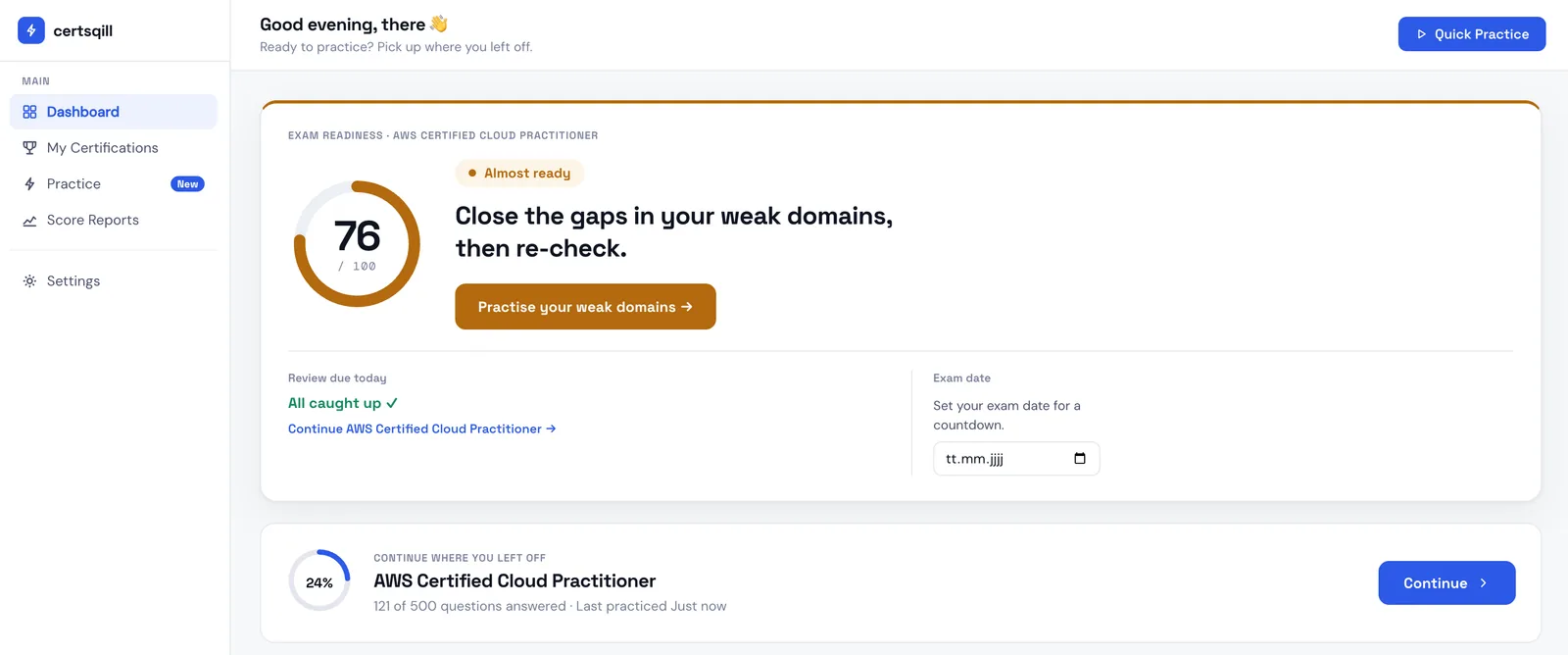
Certsqill measures your SPS readiness across every official exam domain — one 0–100 score from coverage, accuracy and consistency that tells you whether to book, keep studying, or sit.
Why people switch to Certsqill
Everything you need to walk in ready
Know where you stand, understand every mistake, and study in your language — one payment, no subscription.
Your SPS Readiness Score, not a guess
One number from three signals — coverage, accuracy, and consistency — tells you whether to book the exam or keep studying.
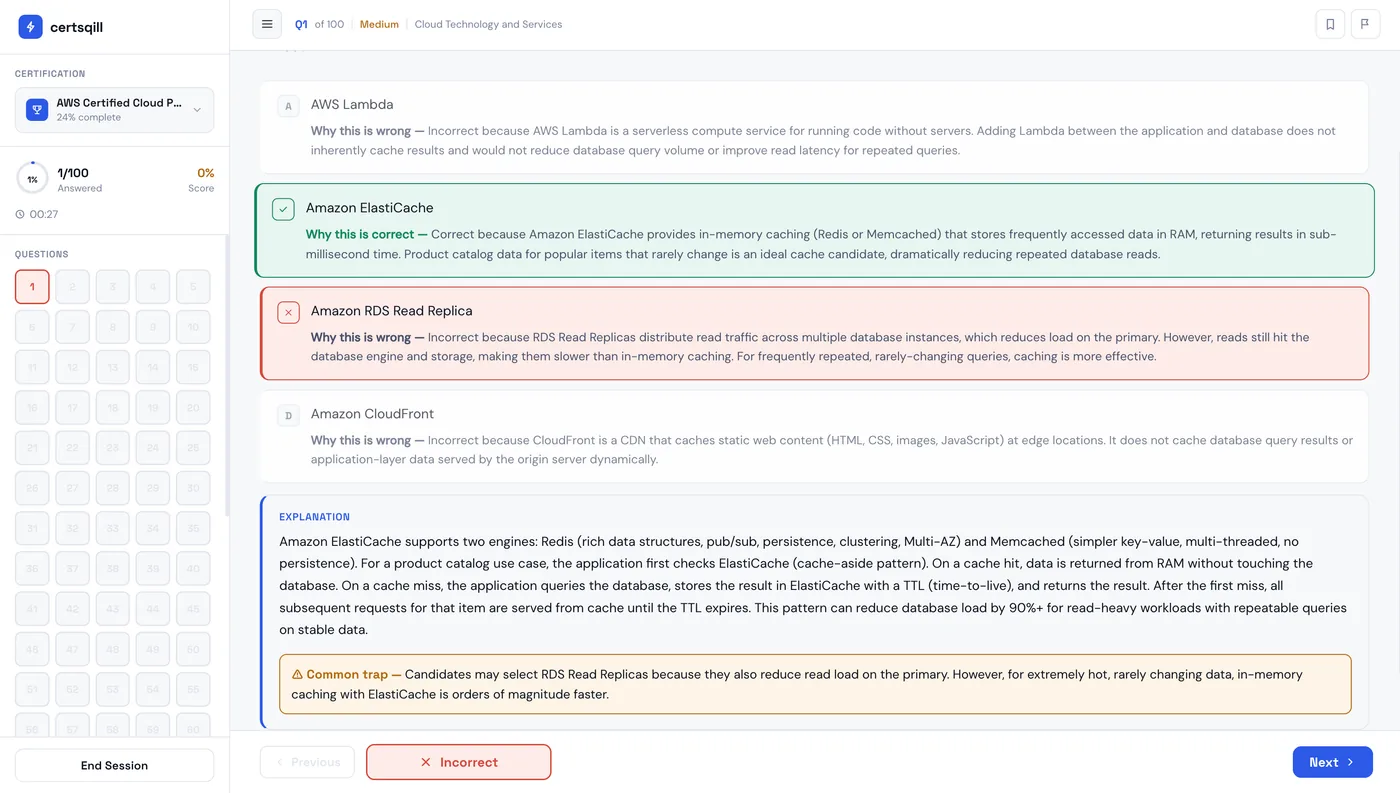
Understand every SPS mistake
When you miss a question, it explains why — using your own answer history to catch the patterns you keep repeating. Included, no subscription.
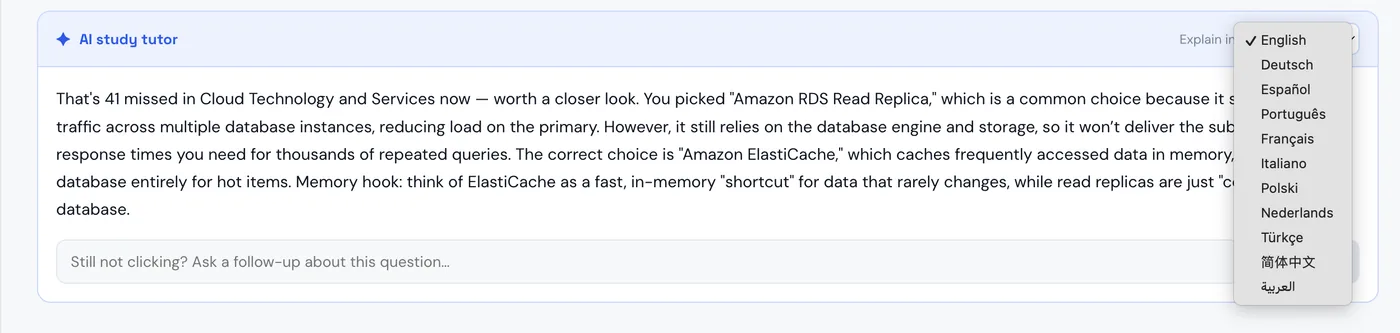
Explanations in your language, questions stay exam-accurate
Get every explanation in your language while the questions stay in exam-accurate English. Technical terms stay in English — the way the exam writes them.
Everything you need to pass
Why you can trust these SPS questions
What is the Scaled Professional Scrum certification?
Scaled Professional Scrum (SPS) is a Scrum.org certification. Scrum.org says it validates your knowledge of using the Nexus Framework as described in the Nexus Guide — the knowledge needed to enable multiple Scrum Teams to work from a single Product Backlog and build an Integrated Increment that meets a goal.
That makes SPS a certification about one specific scaling approach. It does not test scaling frameworks in general; it tests Nexus, the framework Ken Schwaber and Scrum.org developed as a minimal extension of Scrum.
Successful candidates receive a Credly digital credential with the certification.
Source: Scrum.org — Scaled Professional Scrum certification. Checked 14 October 2026.
SPS exam cost and attempts
The SPS assessment costs US$250 per attempt. You buy a password, and Scrum.org states that passwords have no expiration date but are valid for one attempt only — a failed attempt means buying another password.
The alternative is the training route. Scrum.org states that its training classes include a free attempt at the associated certification, and the Scaled Professional Scrum course page adds a second attempt at no cost if you score below 85% on a first attempt taken within 14 days of the class.
Source: Scrum.org — Scaled Professional Scrum certification. Checked 14 October 2026.
Scaled Professional Scrum exam format
The exam has 40 questions in 60 minutes, so you have 90 seconds per question. Question types are multiple choice, multiple answer and true/false. The passing score is 85%, which means you can miss no more than six questions.
The assessment is in English. Scrum.org notes that many candidates use the Google Translate plugin, but it does not guarantee the quality of the translation — on an exam where single words like “accountable” or “at least once a Sprint” decide the answer, that matters.
Source: Scrum.org — Scaled Professional Scrum certification. Checked 14 October 2026.
What is on the SPS exam?
Scrum.org names one focus area for SPS, The Nexus Framework, with two sub-areas: Application of Nexus and Scaling Fundamentals. The source text is the Nexus Guide, currently the January 2021 edition.
Learn the guide’s specifics, because the questions turn on them. A Nexus is a group of approximately three to nine Scrum Teams working on a single product, with one Product Owner and one Product Backlog. The Nexus Integration Team is accountable for ensuring that a done Integrated Increment is produced at least once every Sprint.
- Events — the Sprint, Cross-Team Refinement, Nexus Sprint Planning, Nexus Daily Scrum, Nexus Sprint Review, Nexus Sprint Retrospective
- Artifacts and commitments — Product Backlog (Product Goal), Nexus Sprint Backlog (Nexus Sprint Goal), Integrated Increment (Definition of Done)
- Accountabilities — the Nexus Integration Team: Product Owner, a Scrum Master and one or more Nexus Integration Team Members
Source: Scrum.org — Online Nexus Guide (January 2021). Checked 14 October 2026.
Prerequisites for the SPS certification
Scrum.org lists no prerequisite certification for SPS, and course attendance is not required. You can buy a password and take the assessment directly.
The level of the material still assumes solid Scrum knowledge. Scrum.org describes the Scaled Professional Scrum class as appropriate for experienced Scrum professionals and states plainly that it is not suitable for people with little Scrum knowledge or experience. Nexus extends Scrum rather than replacing it, so gaps in Scrum basics show up quickly.
Source: Scrum.org — Scaled Professional Scrum with Nexus training. Checked 14 October 2026.
Scaled Professional Scrum training
Scrum.org’s Scaled Professional Scrum with Nexus training is generally delivered over two consecutive days in person; Live Virtual Classes may be split into more, shorter days. It is activity-based and taught by Professional Scrum Trainers using Scrum.org’s course materials.
Scrum.org names Scrum Masters, Scrum Team members, Agile Coaches and department managers as the audience. The class covers typical scaling challenges, cross-team dependencies, organising teams and work in a Nexus, and delivering value across the whole Nexus.
Participants receive a password for the SPS assessment. Scrum.org does not list a single course price, since classes are run by individual trainers.
Source: Scrum.org — Scaled Professional Scrum with Nexus training. Checked 14 October 2026.
SPS practice: Nexus Open
Scrum.org’s free practice assessment for SPS is Nexus Open. It draws 10 questions at random from a larger pool and does not include certification.
Ten questions is a quick check, not a simulation of a 40-question exam. Use it to find gaps in your reading of the Nexus Guide, then go back to the guide rather than repeating the open assessment until the answers look familiar.
Source: Scrum.org — Nexus Open. Checked 14 October 2026.
SPS exam rules and dumps
Scrum.org’s Standard of Conduct for Assessments requires that you do not share any assessment materials, including your answers, and that you have not received any answers to the questions in advance.
Failing to meet these standards may result in your Scrum.org certifications being revoked and your account being disabled. Answer dumps for SPS therefore put every Scrum.org certification you hold at risk.
Source: Scrum.org — Standard of conduct for assessments. Checked 14 October 2026.
Does the SPS certification expire?
No. Scrum.org lists SPS as a lifetime certification with no annual renewal fee — the same model as PSM I.
Source: Scrum.org — Scaled Professional Scrum certification. Checked 14 October 2026.
SPS vs PSM I
PSM I, Professional Scrum Master I, is the certification most SPS candidates already know. It costs US$200 per attempt and has 80 questions in 60 minutes; SPS costs US$250 and has 40 questions in the same 60 minutes. Both require 85% and both are lifetime certifications.
The content is where they differ. PSM I tests Scrum for a single team; SPS tests Nexus, which applies when several Scrum Teams share one product. Scrum.org lists neither as a prerequisite for the other, but Nexus builds directly on Scrum, so the order PSM I first, SPS second is the natural one.
Source: Scrum.org — Professional Scrum Master I certification. Checked 14 October 2026.
SPS practice questions
Certsqill’s SPS practice questions are expert-developed and based on the Nexus Guide, covering both of Scrum.org’s sub-areas: Application of Nexus and Scaling Fundamentals.
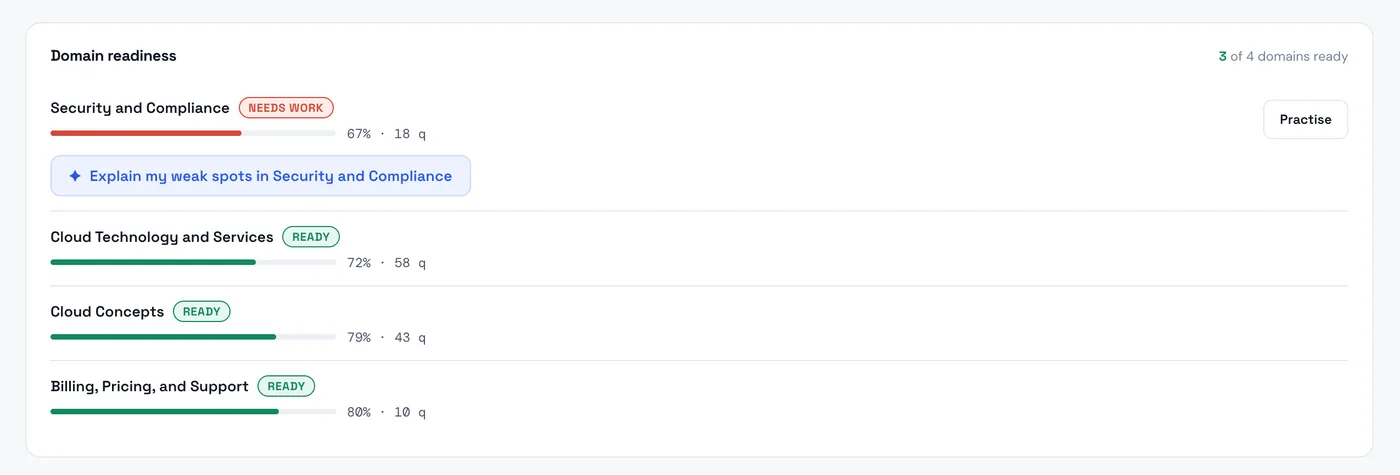
Each question comes with an explanation for every answer option, so you see why a near-miss wording is wrong. Your results build a readiness score per domain, which matters on an exam where six mistakes are the limit. A 7-day money-back guarantee applies.
SPS questions people ask
What is the Scaled Professional Scrum certification?
A Scrum.org certification that validates your knowledge of using the Nexus Framework to have multiple Scrum Teams work from a single Product Backlog. Source: Scrum.org, checked 14 October 2026.
How much does the SPS exam cost?
US$250 per attempt; each password is valid for one attempt and does not expire. Source: Scrum.org SPS page, checked 14 October 2026.
How many questions are on the SPS exam?
40 questions in 60 minutes. Source: Scrum.org SPS page, checked 14 October 2026.
What is the SPS passing score?
85%. Source: Scrum.org SPS page, checked 14 October 2026.
Do I need to take a course for SPS?
No. Attendance is not a prerequisite, but Scrum.org highly recommends the Scaled Professional Scrum class, which includes an attempt. Source: Scrum.org, checked 14 October 2026.
How long is the Scaled Professional Scrum training?
Generally two consecutive days in person; virtual classes may be split into more, shorter days. Source: Scrum.org course page, checked 14 October 2026.
Is there a free SPS practice test?
Yes. Nexus Open has 10 random questions and does not include certification. Source: Scrum.org, checked 14 October 2026.
Does the SPS certification expire?
No. It is a lifetime certification with no annual renewal fee. Source: Scrum.org SPS page, checked 14 October 2026.
How many Scrum Teams are in a Nexus?
Approximately three to nine, working on a single product with one Product Owner and one Product Backlog. Source: Scrum.org Nexus Guide, checked 14 October 2026.

