Professional Scrum with Kanban I (PSK I) certification
Professional Scrum with Kanban I (PSK I) is Scrum.org’s certification for using Kanban practices inside Scrum. The assessment costs $200 per attempt, has 45 questions in 60 minutes and needs 85% to pass. It is in English, never expires and has no renewal fee. A course is not required, but Scrum.org’s two-day Professional Scrum with Kanban training includes a free attempt.
- Certification
- Professional Scrum with Kanban I (PSK I), issued by Scrum.orgScrum.org PSK certification page, checked 14 October 2026
- Cost
- $200 USD per attemptScrum.org PSK certification page, checked 14 October 2026
- Questions
- 45Scrum.org PSK certification page, checked 14 October 2026
- Time limit
- 60 minutesScrum.org PSK certification page, checked 14 October 2026
- Passing score
- 85%Scrum.org PSK certification page, checked 14 October 2026
- Format
- Multiple choice, multiple answer and true/false; EnglishScrum.org PSK certification page, checked 14 October 2026
- Prerequisites
- None; a Professional Scrum with Kanban class is recommendedScrum.org PSK certification page, checked 14 October 2026
- Validity
- Lifetime, no annual renewal feeScrum.org PSK certification page, checked 14 October 2026
- Password
- No expiry, valid for one attemptScrum.org PSK certification page, checked 14 October 2026
Know if you're ready for PSK I — before you book.
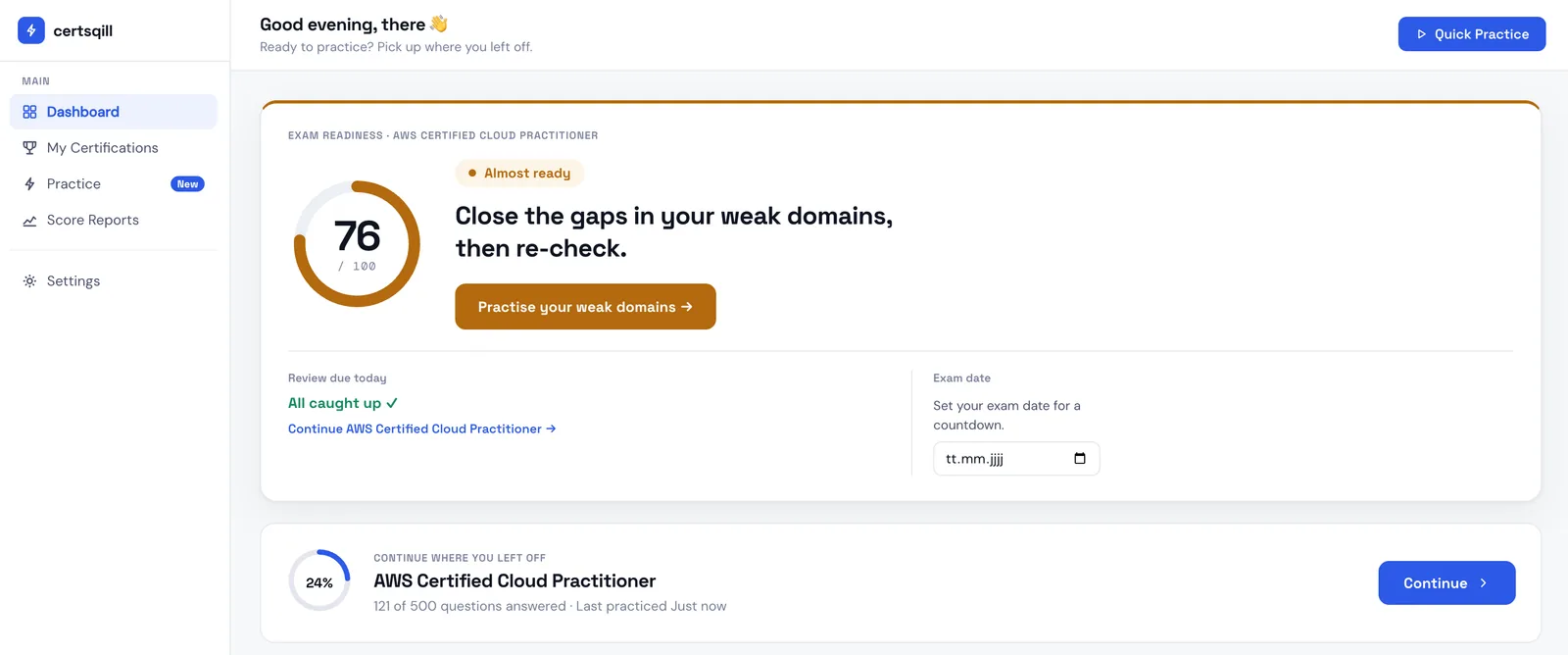
Certsqill measures your PSK I readiness across every official exam domain — one 0–100 score from coverage, accuracy and consistency that tells you whether to book, keep studying, or sit.
Why people switch to Certsqill
Everything you need to walk in ready
Know where you stand, understand every mistake, and study in your language — one payment, no subscription.
Your PSK I Readiness Score, not a guess
One number from three signals — coverage, accuracy, and consistency — tells you whether to book the exam or keep studying.
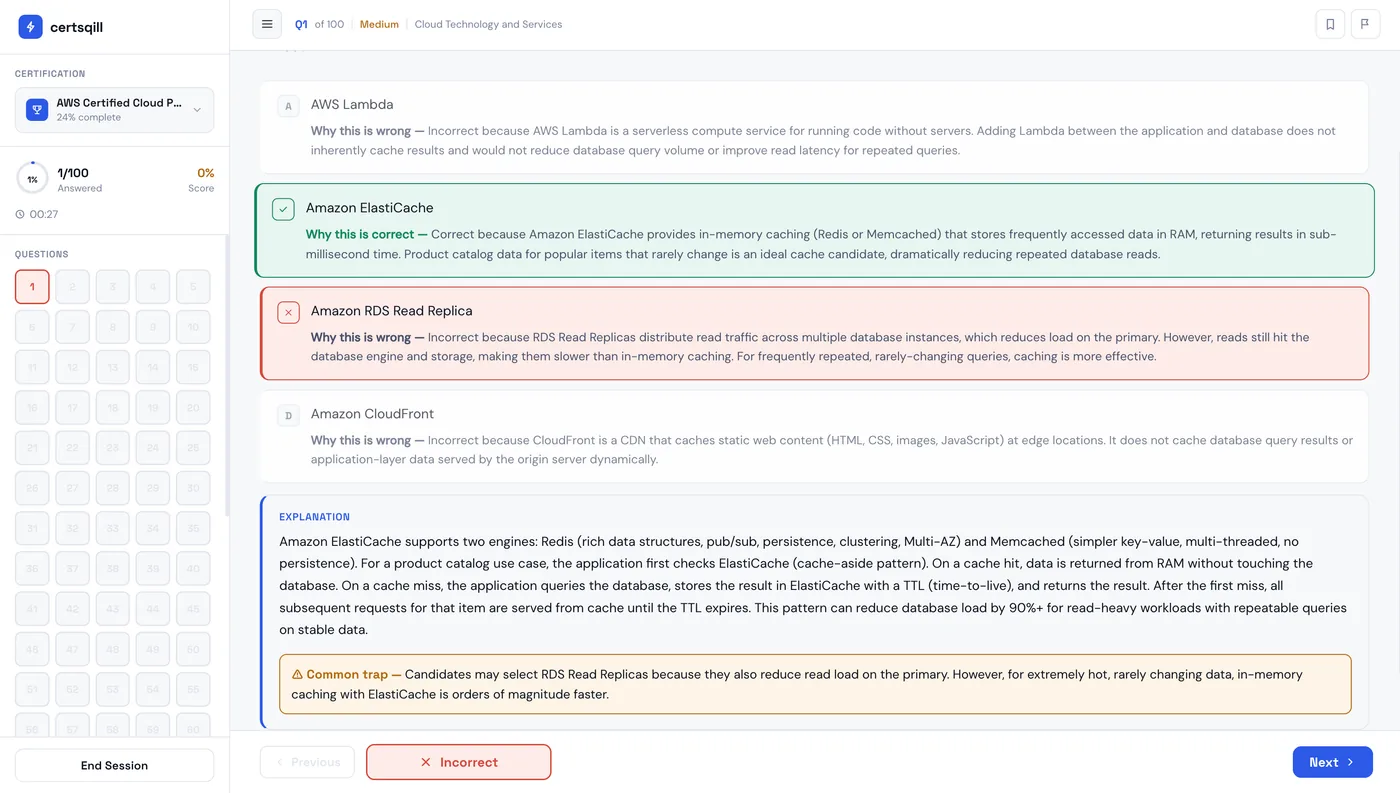
Understand every PSK I mistake
When you miss a question, it explains why — using your own answer history to catch the patterns you keep repeating. Included, no subscription.
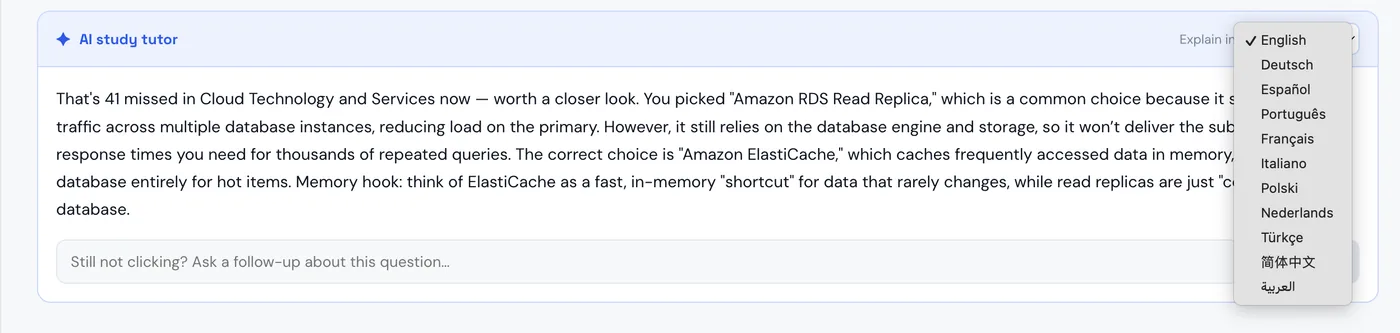
Explanations in your language, questions stay exam-accurate
Get every explanation in your language while the questions stay in exam-accurate English. Technical terms stay in English — the way the exam writes them.
Everything you need to pass
Why you can trust these PSK I questions
What is the PSK I certification?
PSK I, Professional Scrum with Kanban I, is a Scrum.org certification that tests whether you understand how a Scrum Team can use Kanban practices without giving up any part of Scrum. Scrum.org now titles the page “Professional Scrum with Kanban Certification”, but the assessment itself is still referred to as PSK I.
The idea behind it is that teams do not have to choose between Scrum and Kanban. Scrum provides the framework — accountabilities, events, artifacts — and Kanban adds a flow-based way of managing the work inside it: visualising the workflow, limiting work in progress, actively managing items and measuring flow.
Scrum.org aims the matching course at Scrum Masters and other Scrum practitioners who want to improve their practices with Kanban. It is not an introduction to Scrum: the first focus area is applying the Scrum Framework itself.
Source: Scrum.org — Professional Scrum with Kanban Certification. Checked 14 October 2026.
How much does the PSK I cert cost?
The PSK I assessment costs $200 USD per attempt. You buy a password, which never expires but is valid for one attempt only, so each retake means buying another password.
The alternative route is a class. Scrum.org’s Professional Scrum with Kanban training includes a free attempt at PSK I, and if you take the assessment within 14 days of receiving the password and score below 85%, you get a second attempt at no cost.
Source: Scrum.org — Professional Scrum with Kanban Certification. Checked 14 October 2026.
PSK I exam format
The assessment has 45 questions and a 60-minute time limit — a little over a minute per question. Questions are multiple choice, multiple answer and true/false. It is available in English; Scrum.org notes that many candidates use a browser translation plugin but does not guarantee the quality of the translation.
Many questions describe a team situation and ask what a Scrum Team using Kanban should do. Scrum.org points out that some draw on your own experience, which is why reading the guides once is rarely enough.
Source: Scrum.org — Professional Scrum with Kanban Certification. Checked 14 October 2026.
PSK I passing score
You need 85% to pass PSK I. On 45 questions that leaves room for very few mistakes, so general Kanban knowledge is not enough — you need the exact definitions from the Kanban Guide for Scrum Teams.
The bar is the same 85% that Scrum.org sets for PSM I, with the same 60-minute limit but fewer questions.
Source: Scrum.org — Professional Scrum with Kanban Certification. Checked 14 October 2026.
What is on the PSK I assessment?
Scrum.org lists two focus areas. The first, Understanding and Applying the Scrum Framework, covers how Scrum and Kanban can be used together without compromising either framework’s core tenets. The second, Complementary Practices, covers Kanban practices and the flow metrics for Kanban as described in the Kanban Guide for Scrum Teams.
The Kanban Guide for Scrum Teams defines four core practices and four flow metrics. Know each one, and how it is used within Scrum’s events, before you sit the assessment.
- Core practice: visualization of the workflow
- Core practice: limiting work in progress (WIP)
- Core practice: active management of work items in progress
- Core practice: inspecting and adapting the team’s Definition of Workflow
- Flow metrics: work in progress, cycle time, work item age and throughput
Source: Scrum.org — Scrum with Kanban. Checked 14 October 2026.
Professional Scrum with Kanban course and training
Scrum.org’s Professional Scrum with Kanban training is a two-day course, held in person or as a live virtual class that may be split into more, shorter days. It is taught by Professional Scrum Trainers and designed for experienced Scrum practitioners with a good understanding of Professional Scrum.
The learning objectives line up with the assessment: understanding flow and Kanban practices from the Scrum Team’s perspective, using data to create a team’s Service Level Expectation (SLE), and helping the team overcome common flow problems by actively managing WIP. Attendees can also claim 14 PMI PDUs for the two-day course.
The course is not a prerequisite. Scrum.org says it is ideal to have read the Kanban Guide for Scrum Teams and passed the Scrum Open assessment before attending.
Source: Scrum.org — Professional Scrum with Kanban Training. Checked 14 October 2026.
Does PSK I expire?
No. PSK I is a lifetime certification with no annual renewal fee. Once you pass, there are no continuing education credits to log and nothing to renew.
Source: Scrum.org — Professional Scrum with Kanban Certification. Checked 14 October 2026.
PSK I study materials
Two short documents define the scope: the Scrum Guide and the Kanban Guide for Scrum Teams, which Scrum.org describes as the result of a collaboration between members of the Scrum.org community and leaders of the Kanban community. Read both more than once; the assessment rewards exact definitions.
Scrum.org’s Scrum with Kanban page links an open practice assessment for PSK, and the Professional Scrum with Kanban class is the official training route. Beyond that, practise applying the metrics: calculate cycle time and throughput from a real or sample board, and work out what an ageing item should prompt the team to do.
Source: Scrum.org — Scrum with Kanban. Checked 14 October 2026.
PSK I vs PSM I
PSM I tests the Scrum framework itself; PSK I tests how Kanban practices work within Scrum. Both cost $200 per attempt, both have a 60-minute limit and an 85% passing score, and both are lifetime certifications.
The difference is depth and length. PSM I has 80 questions across the whole Scrum framework, while PSK I has 45 questions focused on flow, WIP and the four Kanban metrics. Because the PSK course is designed for experienced Scrum practitioners, PSM I is a natural first step, although Scrum.org does not require it.
Source: Scrum.org — Professional Scrum Master I Certification. Checked 14 October 2026.
PSK I practice questions
Certsqill’s PSK I practice questions are expert-developed and follow Scrum.org’s two focus areas, including the four Kanban practices and the flow metrics.
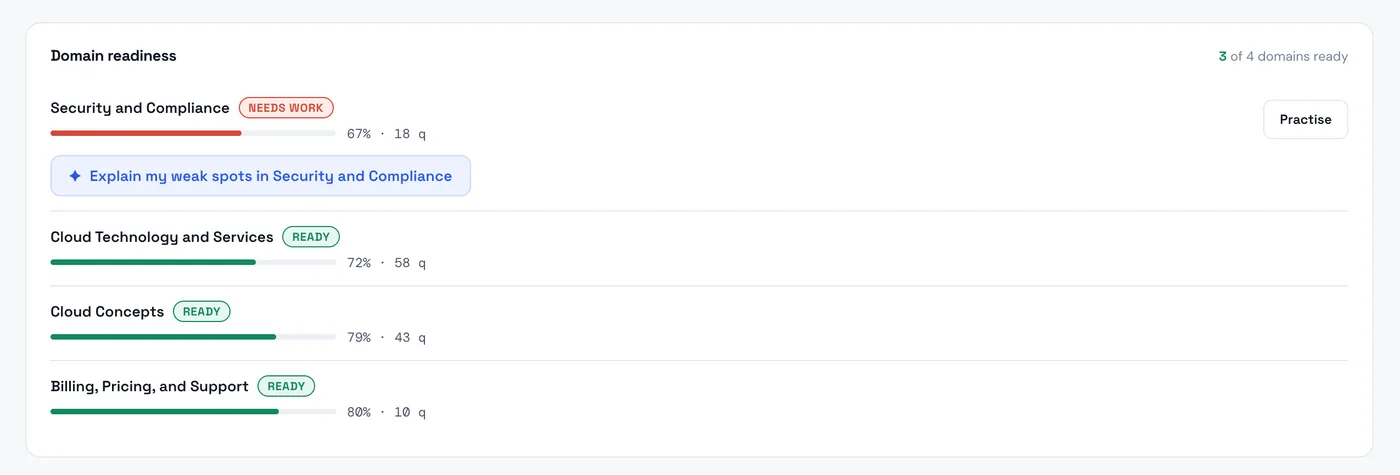
Every question comes with an explanation for every answer option, tied back to how the Kanban Guide for Scrum Teams or the Scrum Guide defines the concept. Your results build a readiness score per domain, so you can see whether you are consistently above the 85% line before you spend $200 on a password.
PSK I questions people ask
What is the PSK I certification?
Professional Scrum with Kanban I, a Scrum.org certification on using Kanban practices and flow metrics within Scrum. Source: Scrum.org, checked 14 October 2026.
How much does PSK I cost?
$200 USD per attempt. Scrum.org’s Professional Scrum with Kanban class includes a free attempt. Source: Scrum.org, checked 14 October 2026.
How many questions are on the PSK I exam?
45 questions in 60 minutes. Source: Scrum.org PSK certification page, checked 14 October 2026.
What is the PSK I passing score?
85%. Source: Scrum.org PSK certification page, checked 14 October 2026.
Do I need to take a course for PSK I?
No. Attending a Professional Scrum with Kanban class is recommended but not required. Source: Scrum.org, checked 14 October 2026.
How long is the Professional Scrum with Kanban training?
Two days in person; live virtual classes may be split into more, shorter days. Source: Scrum.org course page, checked 14 October 2026.
Does the PSK I certification expire?
No. It is a lifetime certification with no annual renewal fee. Source: Scrum.org, checked 14 October 2026.
Does the PSK I password expire?
No, but each password is valid for one attempt only. Source: Scrum.org PSK certification page, checked 14 October 2026.
What should I study for PSK I?
The Scrum Guide and the Kanban Guide for Scrum Teams: the four Kanban practices and the flow metrics work in progress, cycle time, work item age and throughput. Checked 14 October 2026.

