The FINRA Series 7 exam: what it is, how it works and how to prepare
The Series 7 exam is FINRA’s General Securities Representative qualification exam: 125 scored multiple-choice questions in 3 hours and 45 minutes, with a passing score of 72. It costs $395, you must be sponsored by a FINRA member firm to sit it, and you need to pass the SIE as well to qualify for registration.
- Exam
- Series 7, General Securities Representative Qualification ExaminationFINRA, checked 19 October 2026
- Scored questions
- 125 multiple choice, four answer choices eachFINRA Series 7 Content Outline, checked 19 October 2026
- Unscored pretest items
- 5 additional, unidentifiedFINRA Series 7 Content Outline, checked 19 October 2026
- Time
- 3 hours and 45 minutesFINRA, checked 19 October 2026
- Passing score
- 72FINRA, checked 19 October 2026
- Exam fee
- $395FINRA, checked 19 October 2026
- Corequisite
- SIE exam (order does not matter)FINRA SIE FAQ, checked 19 October 2026
- Sponsorship
- Required: association with a FINRA member firmFINRA, checked 19 October 2026
- Retake wait
- 30 days after a first or second fail; 180 days after a third (until 19 January 2027)FINRA Regulatory Notice 26-18, checked 19 October 2026
- Result validity
- Two years without a registrationFINRA Exam Credit and Exam Validity, checked 19 October 2026
Know if you're ready for Series 7 — before you book.
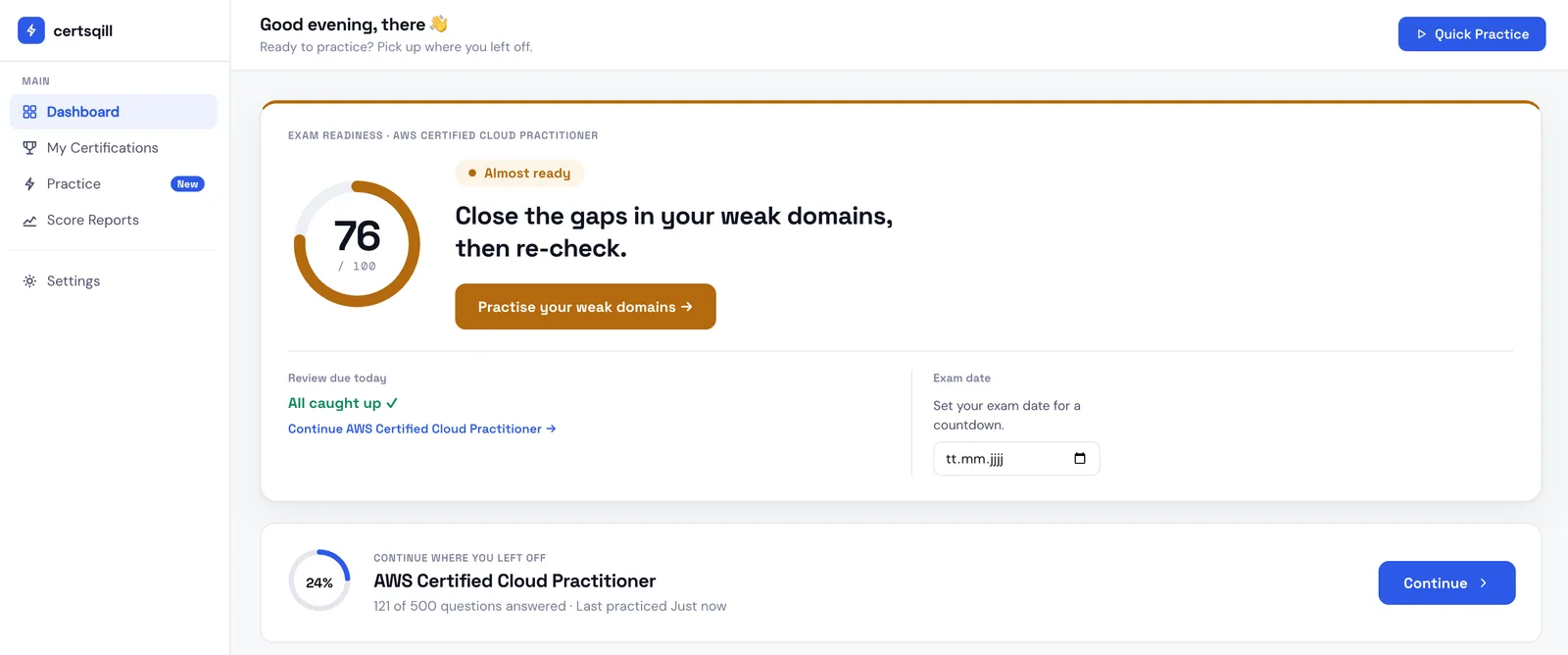
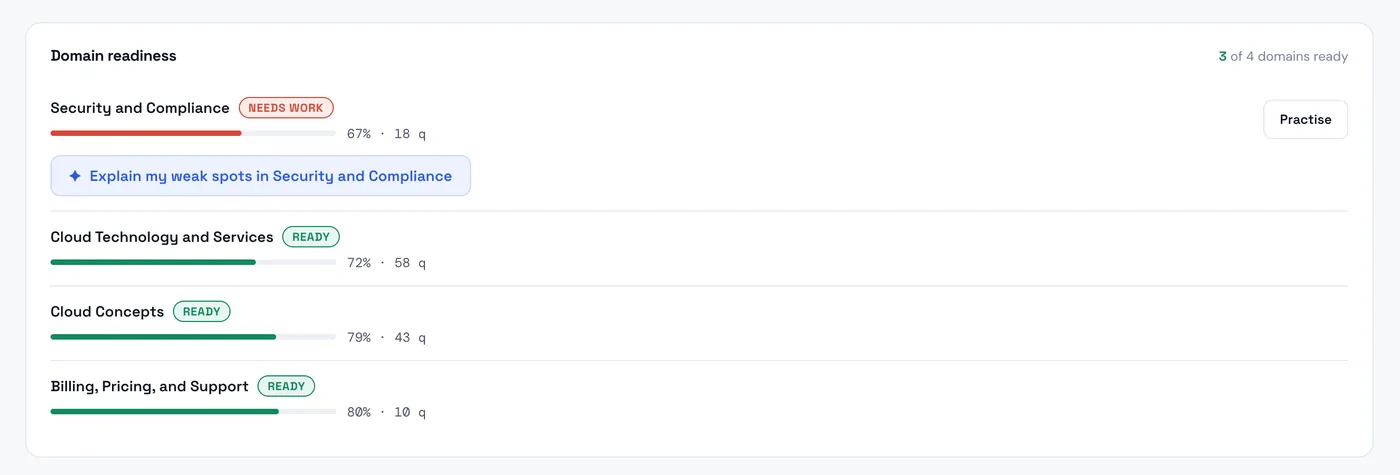
Certsqill measures your 7 readiness across every official exam domain — one 0–100 score built only from first-try answers and kept deliberately conservative, so a high number has to be earned. It tells you whether to book, keep studying, or sit.
Why people switch to Certsqill
Everything you need to walk in ready
Know where you stand, understand every mistake, and study in your language — one payment, no subscription.
Your Series 7 Readiness Score, not a guess
One conservative number from your first-try answers across every exam domain tells you whether to book the exam or keep studying.
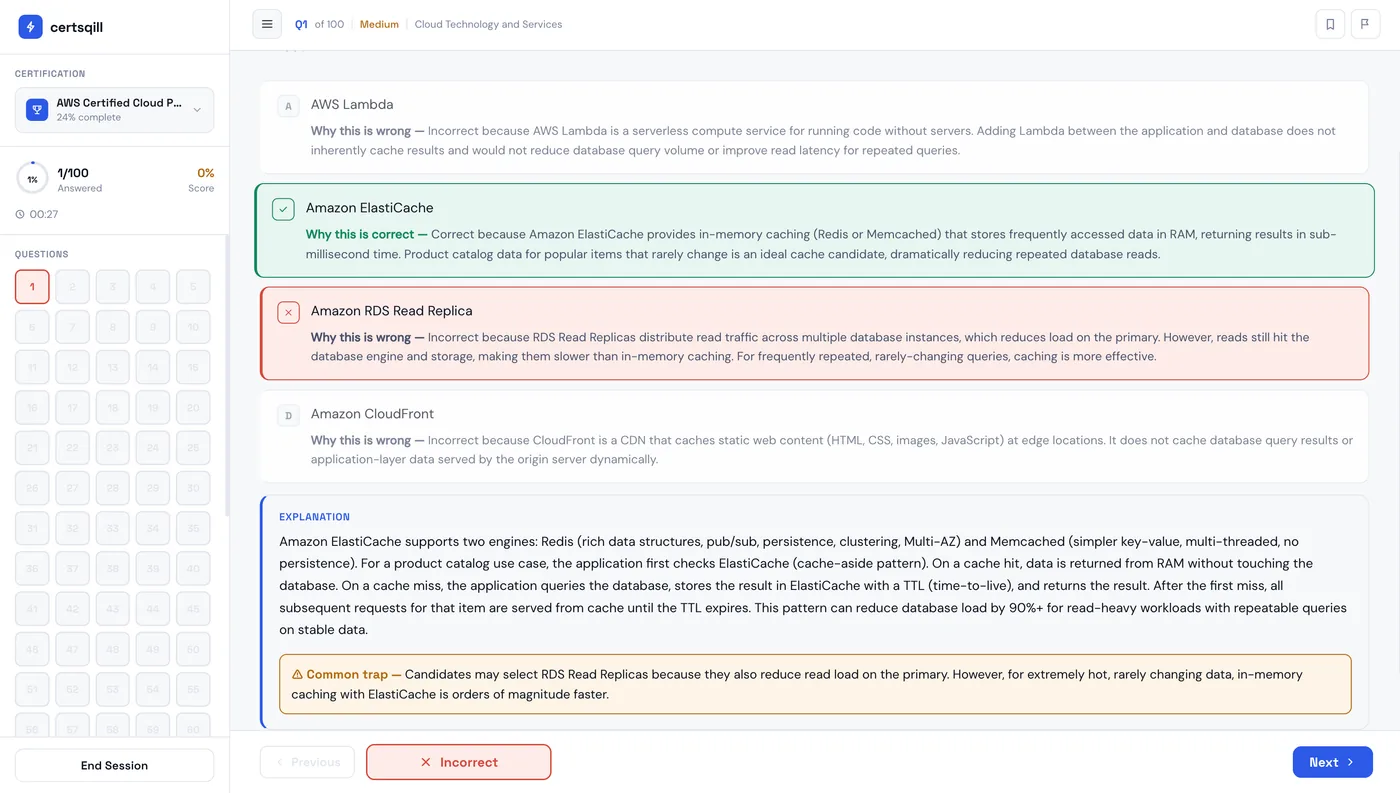
Understand every Series 7 mistake
When you miss a question, it explains why — using your own answer history to catch the patterns you keep repeating. Included, no subscription.
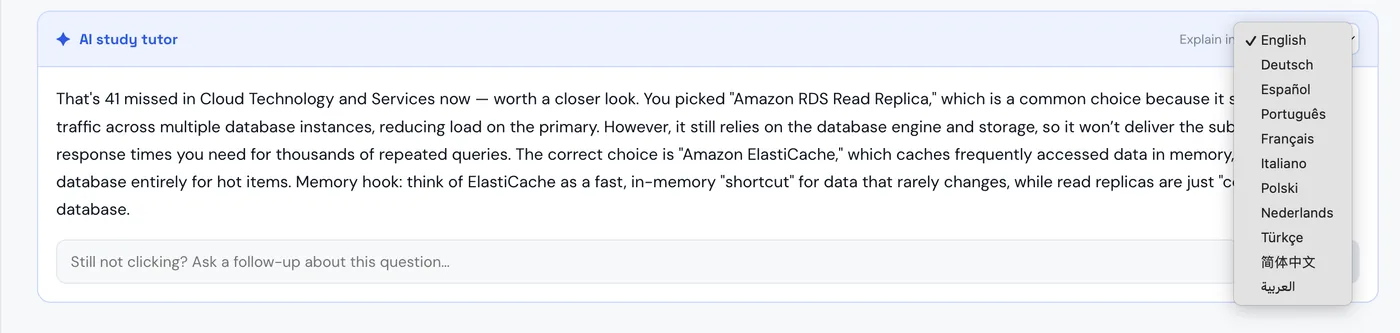
Explanations in your language, questions stay exam-accurate
Get every explanation in your language while the questions stay in exam-accurate English. Technical terms stay in English — the way the exam writes them.
Everything you need to pass
Why you can trust these 7 questions
What is a Series 7 exam?
The FINRA Series 7 exam is the General Securities Representative Qualification Examination. FINRA says it assesses the competency of an entry-level registered representative to perform the job of a general securities representative, the role that solicits, recommends and processes trades across a broad range of securities.
Here is what a Series 7 exam looks like on the day: 125 scored multiple-choice items, each with four answer choices, plus 5 unscored pretest items you cannot tell apart from the rest, in 3 hours and 45 minutes. It is taken at a Prometric test center; FINRA allows online delivery for this exam only with an approved accommodation.
Source: FINRA — Series 7 Content Outline. Checked 19 October 2026.
What is the Series 7 license?
People say “Series 7 license” or “Series 7 certification”, but FINRA’s own term is registration. Passing the Series 7 and the SIE qualifies you for the General Securities Representative registration, which your firm files for you. So what is a Series 7 license in practice? It is that registration, held through a FINRA member firm.
Series 7 licensing therefore depends on a firm at both ends: you need a sponsoring firm to sit the exam, and a firm to hold the registration afterwards. A passed result stays valid for two years without a registration; after a registration ends, the two years run from the termination date.
Source: FINRA — Series 7. Checked 19 October 2026.
Prerequisite for Series 7: SIE and firm sponsorship
There is no education or experience prerequisite for Series 7 on FINRA’s pages. What FINRA does require is association with and sponsorship by a FINRA member firm (or another applicable self-regulatory organization member firm) to take the exam.
The SIE is a corequisite, not a prerequisite: you must pass both, but FINRA states that the order in which you pass them does not matter. The SIE itself is open to anyone aged 18 or older without a firm, while passing the SIE alone does not qualify you for registration.
Source: FINRA — SIE Exam and Exam Restructuring FAQ. Checked 19 October 2026.
How to get a Series 7 license
The route FINRA describes has four steps. None of them can be skipped, and the firm is involved from the start.
- Join a FINRA member firm that will sponsor you for the Series 7.
- The firm enrolls you; FINRA then posts a 120-day window in which the exam must be taken.
- Book your appointment with Prometric, FINRA’s test delivery vendor, and pass the Series 7 with a score of 72 or more.
- Pass the SIE as well (before or after), so the firm can register you as a General Securities Representative.
Source: FINRA — Schedule an Exam. Checked 19 October 2026.
What’s on the Series 7 exam?
FINRA organizes the Series 7 questions by four job functions. The third function dominates: almost three in four questions are about explaining investments, making suitable recommendations, transferring assets and keeping records, across equities, packaged products, options, debt, and municipal and government securities.
- F1 Seeks business for the broker-dealer from customers and potential customers: 9 questions (7%)
- F2 Opens accounts after obtaining and evaluating customers’ financial profile and investment objectives: 11 questions (9%)
- F3 Provides customers with information about investments, makes recommendations, transfers assets and maintains appropriate records: 91 questions (73%)
- F4 Obtains and verifies customers’ purchase and sales instructions and agreements; processes, completes and confirms transactions: 14 questions (11%)
Source: FINRA — Series 7 Content Outline. Checked 19 October 2026.
How hard is the Series 7 exam?
FINRA does not publish a pass rate for the Series 7 alone, so any single figure you see quoted is not a Series 7 statistic from FINRA. What FINRA does publish explains where the difficulty lies: 125 scored questions in 3 hours and 45 minutes, a passing score of 72 on an equated scale, and 73% of the exam in one broad function that spans every major product type.
Is the Series 7 test hard? For most candidates the challenge is breadth plus application: options strategies, suitability for a given customer profile, and margin and settlement rules sit side by side. No reference materials are allowed in the room, and there is no penalty for guessing, so answer every question.
Source: FINRA — Series 7 Content Outline. Checked 19 October 2026.
Series 7 exam prep: how to prepare for Series 7 exam day
Good Series 7 exam preparation starts with FINRA’s content outline, because it lists every task, topic and rule area the questions are written from. Weight your time by the outline: if F3 is 73% of the exam, options, debt and packaged products deserve most of your hours.
FINRA’s Series 7 page links the content outline, an exam tutorial that shows how the test screens work, and the SIE practice test. FINRA does not list a Series 7 exam prep course of its own on that page, so any course you choose is a private product: check it against the current outline before you pay.
For Series 7 test preparation in the last weeks, switch from reading to timed questions. At 3 hours and 45 minutes for 130 items, you have well under two minutes per question, so practise at that pace.
Source: FINRA — Series 7. Checked 19 October 2026.
Retaking the Series 7 test
If you fail the Series 7 test, FINRA’s current waiting periods are 30 calendar days after the first and second failed attempts and 180 calendar days after the third and any later failed attempt within a two-year period.
FINRA has announced shorter waits from 19 January 2027: 15 calendar days after the first and second failed attempts and 60 calendar days after the third and later failed attempts within two years. The wait applies only to the exam you failed, so failing the SIE does not block your Series 7 appointment.
Source: FINRA — Regulatory Notice 26-18. Checked 19 October 2026.
Keeping your Series 7 qualification
A passed Series 7 result is valid for two years if you are not registered (the SIE is valid for four). If you leave the industry, the two years run from the date your registration was terminated.
FINRA’s Maintaining Qualifications Program can extend the validity of a terminated qualification for up to five years beyond the termination date, which matters if you plan a career break.
Source: FINRA — Exam Credit and Exam Validity. Checked 19 October 2026.
Series 7 practice test questions
Certsqill’s FINRA Series 7 practice questions are expert-developed and mapped to FINRA’s four job functions, so a Series 7 practice exam on Certsqill covers the same balance as the real exam, with most questions on investments and recommendations.
Every question comes with an explanation for each answer option, and your results build a readiness score per function, so you can see whether options, suitability or order handling needs more work before you book. A 7-day money-back guarantee applies.
Series 7 questions people ask
What is a Series 7 license?
It is FINRA’s General Securities Representative registration, which you qualify for by passing the Series 7 and the SIE while associated with a FINRA member firm. Source: FINRA, checked 19 October 2026.
How many questions are on the Series 7?
125 scored multiple-choice questions plus 5 unscored pretest items. Source: FINRA Series 7 Content Outline, checked 19 October 2026.
What is the passing score for the Series 7?
72. Source: FINRA, checked 19 October 2026.
How much does the FINRA Series 7 exam cost?
$395. Source: FINRA, checked 19 October 2026.
How do you get a Series 7 license without a firm?
You cannot. FINRA requires association with and sponsorship by a FINRA member firm. Only the SIE can be taken without a firm. Source: FINRA, checked 19 October 2026.
Do I have to pass the SIE before the Series 7?
No. You must pass both, but FINRA says the order does not matter. Source: FINRA SIE FAQ, checked 19 October 2026.
How difficult is Series 7 exam content compared with the SIE?
The Series 7 is longer (125 scored questions in 3 hours 45 minutes against 75 questions in 1 hour 45 minutes) and has a higher passing score (72 against 70). FINRA does not publish a Series 7 pass rate. Source: FINRA, checked 19 October 2026.
Is the Series 7 exam hard?
FINRA publishes no Series 7 pass rate. The difficulty comes from breadth and pace: 125 scored questions in 3 hours 45 minutes, 73% of them on investments, recommendations and records across all major product types. Source: FINRA Series 7 Content Outline, checked 19 October 2026.
How soon can I retake the Series 7?
After 30 calendar days following a first or second fail, or 180 days following a third fail within two years. From 19 January 2027 these become 15 and 60 days. Source: FINRA Regulatory Notice 26-18, checked 19 October 2026.